
Finding Hot Springs Residents
Start with what you already know. A street address sends you to the Garland County assessor first. A full name opens other doors. The assessor, CourtConnect, the recorder, or a state license board may each hold a piece. An old address belongs in dated city directories, census schedules, maps, and deed books. These lists are not interchangeable. The property roll names taxpayers and owners. VoterView confirms a single registration. It does so only when the searcher already holds the required identifying details. So build a trail rather than a guess. Keep the date and the role attached to every result. A deed party, permit applicant, registered agent, tax-mail recipient, and directory occupant can differ. They can all be different people at one Hot Springs address. Two independent records matching on identity and geography beat a single name hit every time.
- Search the Garland County property roll by owner or situs address, then save the parcel number and legal description.
- Use VoterView only with lawfully known identifying inputs to confirm a registration, precinct, and polling place.
- Check Garland Official Record Search for deeds, mortgages, liens, and other indexed instruments tied to the name or parcel.
- Use CourtConnect for a matching public case and record the court, party role, case number, and filing date.
- For older residents, move to dated directories, census schedules, newspapers, death books, and maps at local or state archives.
Hot Springs Directory Custodians
Garland County splits its resident evidence among several offices. The Circuit Clerk doubles as ex-officio recorder. So the courthouse holds public court files and recorded property instruments side by side. The Assessor ties an owner name to parcel, situs, mailing address, values, and legal description. Elections and the voter roster sit with the County Clerk. That office also handles probate-related duties. Records not already online can be requested from the office that created them. Do not go through a general directory vendor.
Garland Circuit Clerk
501 Ouachita Avenue, Room 207
Hot Springs, AR 71901
501-622-3630
Garland County Assessor
200 Woodbine
Hot Springs, AR 71901
501-622-3730
The City of Hot Springs portal leads to municipal departments, forms, and request routes.
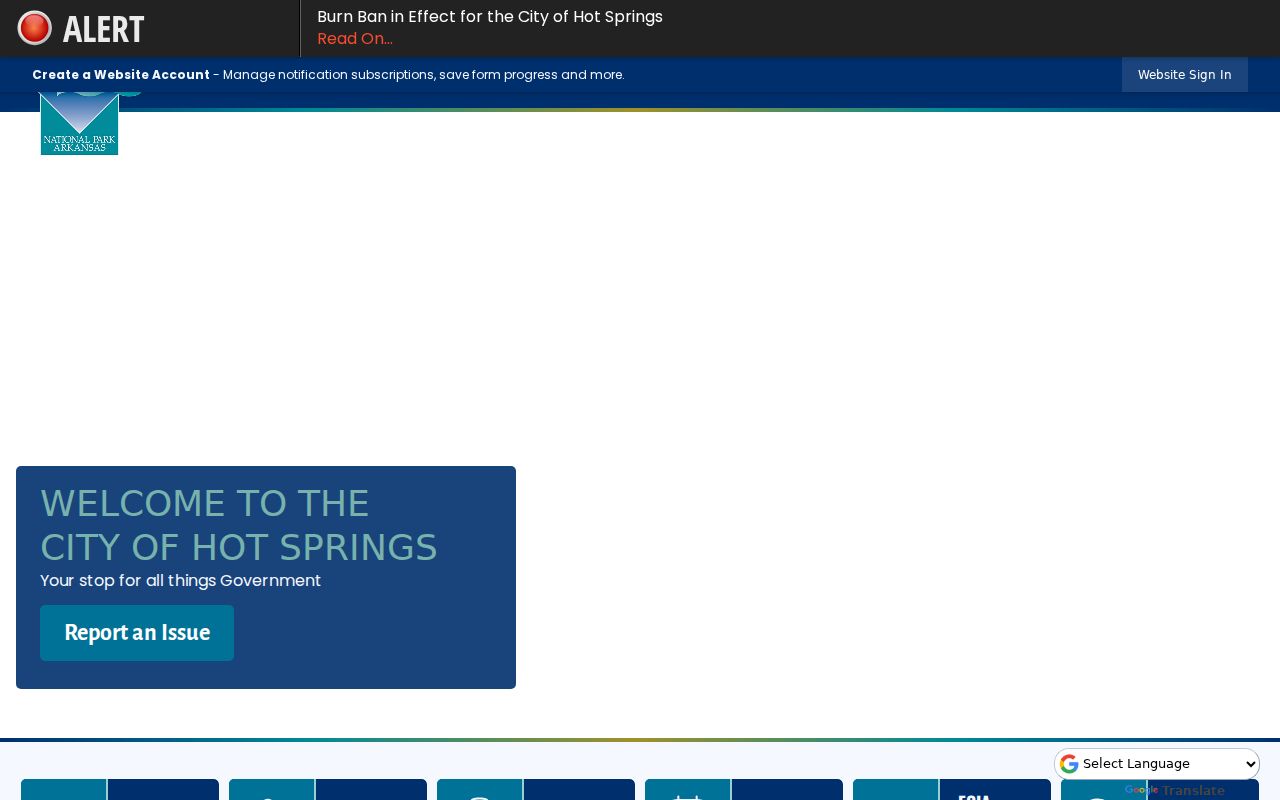
City records cover permits, code cases, boards, and archives.
Hot Springs Property Roll
Begin at the assessor when a Hot Springs search starts from a street or an owner. Its actDataScout record can show the parcel ID, owner spelling, owner mailing address, situs address, legal description, land and improvement values, property class, acreage, transfer references, and building details when populated. Situs is the parcel's physical address. Mailing address is where tax notices go. A match between the two can support owner occupancy. It is still not proof.
| Search control | Input | Best use | Search note |
|---|---|---|---|
| Search mode | Owner, parcel, or address | Choose the known fact | One mode at a time |
| Owner | Surname or organization | Name-led lookup | Try spelling variants |
| Parcel number | County identifier | Exact parcel retrieval | Keep the original format |
| Address | House number and street | Place-led lookup | Relax suffix if no hit |
| Map | Zoom, pan, parcel click | Adjoining land | Lines are not a survey |
The Garland real-property search shows the current hosted interface.
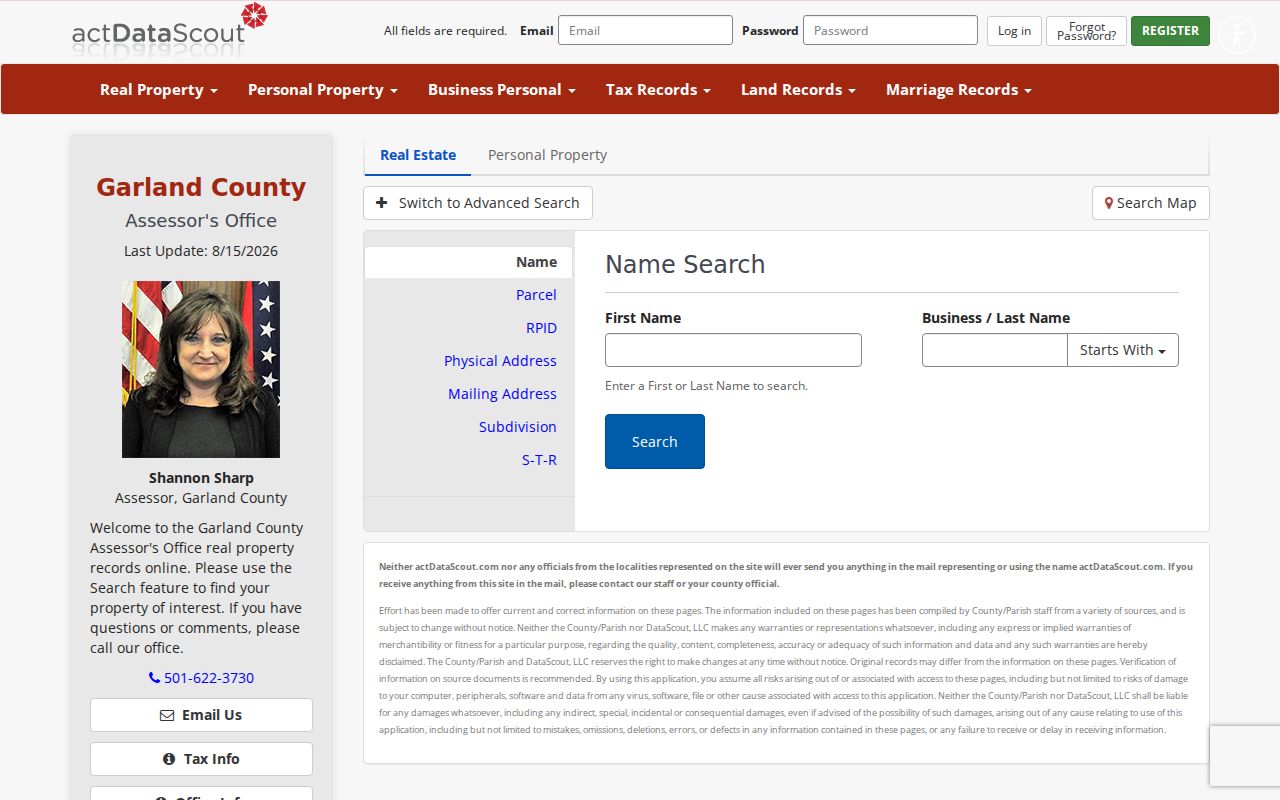
The parcel number anchors deeds, plats, taxes, and city files.
Occupancy check. A tax mailing address or exemption is evidence about an owner, not a complete list of people who live at the Hot Springs parcel.
Hot Springs Deed Index
The Garland Official Record Search tracks deeds, mortgages, liens, and related recorded instruments for Hot Springs real estate. The landing page is plain. It names Real Property as the department, takes a search term, and offers a recorded-date range with quick date buttons. Indexed fields come standard, with optional full-text OCR. OCR is machine-read text lifted from document images, so it catches a street, hotel, or subdivision that structured indexing misses. Old type and rough scans invite errors, though.
Use the current owner and seller names. Try both grantor and grantee roles. Then weigh document type, recorded date, instrument or book-and-page reference, and the legal-description text. A mortgage does not transfer title, and a release does not name a new owner. Match the parcel first. The deed image and its legal description must agree before a name joins the property chain.
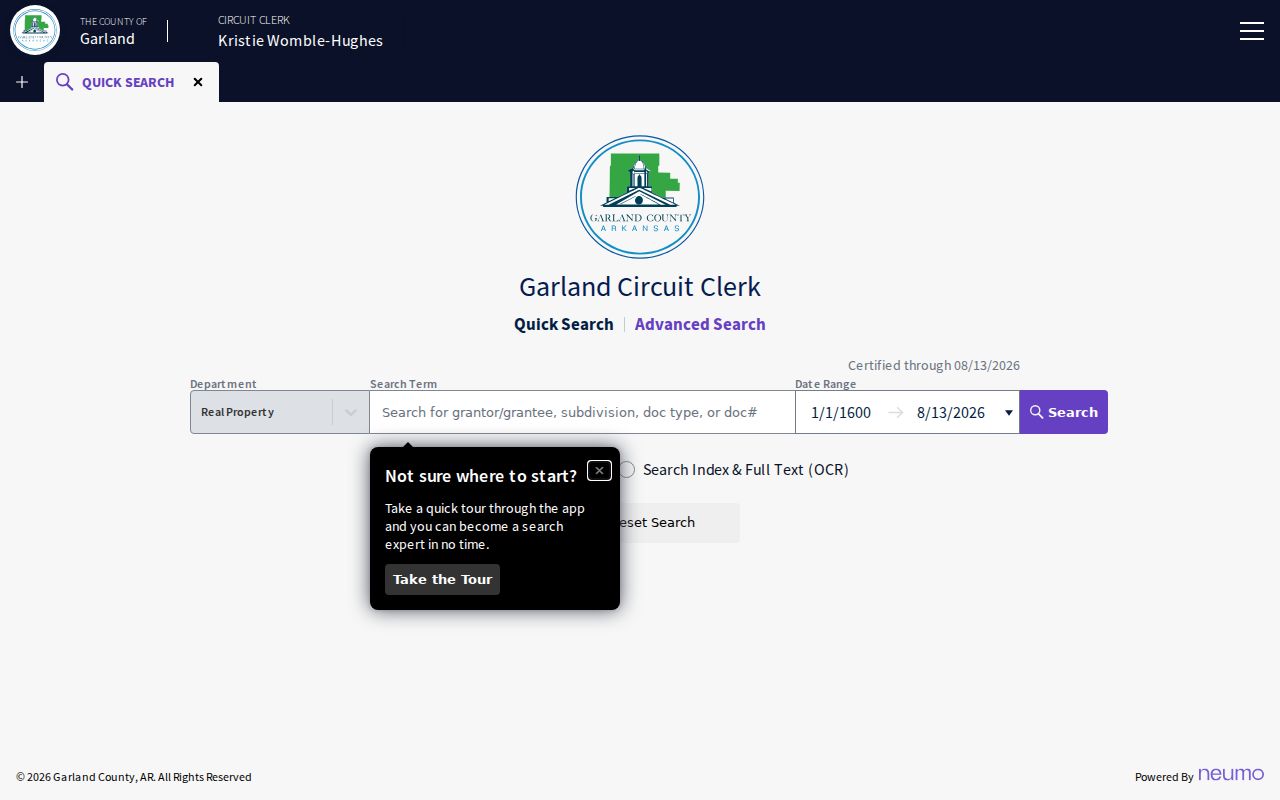
CourtConnect indexes court cases, not recorded land instruments.
- Parcel
- A county tax and mapping unit with its own identifier.
- Index
- A finding aid that points to a record; it is not always the record image.
- Grantor and grantee
- The indexed parties conveying and receiving an interest in a deed.
- Criss-cross directory
- A historical directory arranged by street or telephone rather than surname.
Hot Springs Court Names
The Arkansas CourtConnect search covers public case information for Garland County Circuit Court and District Court. Search by person or business name, case number, or case information where the interface permits. A result may include the case number, court, filing date, status, parties and their roles, attorneys, docket events, hearing dates, and disposition text. Linked documents are not guaranteed. Same-name matches pile up fast. Try Garland County plus a case type or dates. Juvenile, adoption, sealed, expunged, and otherwise protected matters may be absent or limited, and a missing hit proves little. Need a certified copy? Note the case number and contact the Circuit Clerk. Federal cases belong in PACER for the U.S. District Court, Western District of Arkansas.
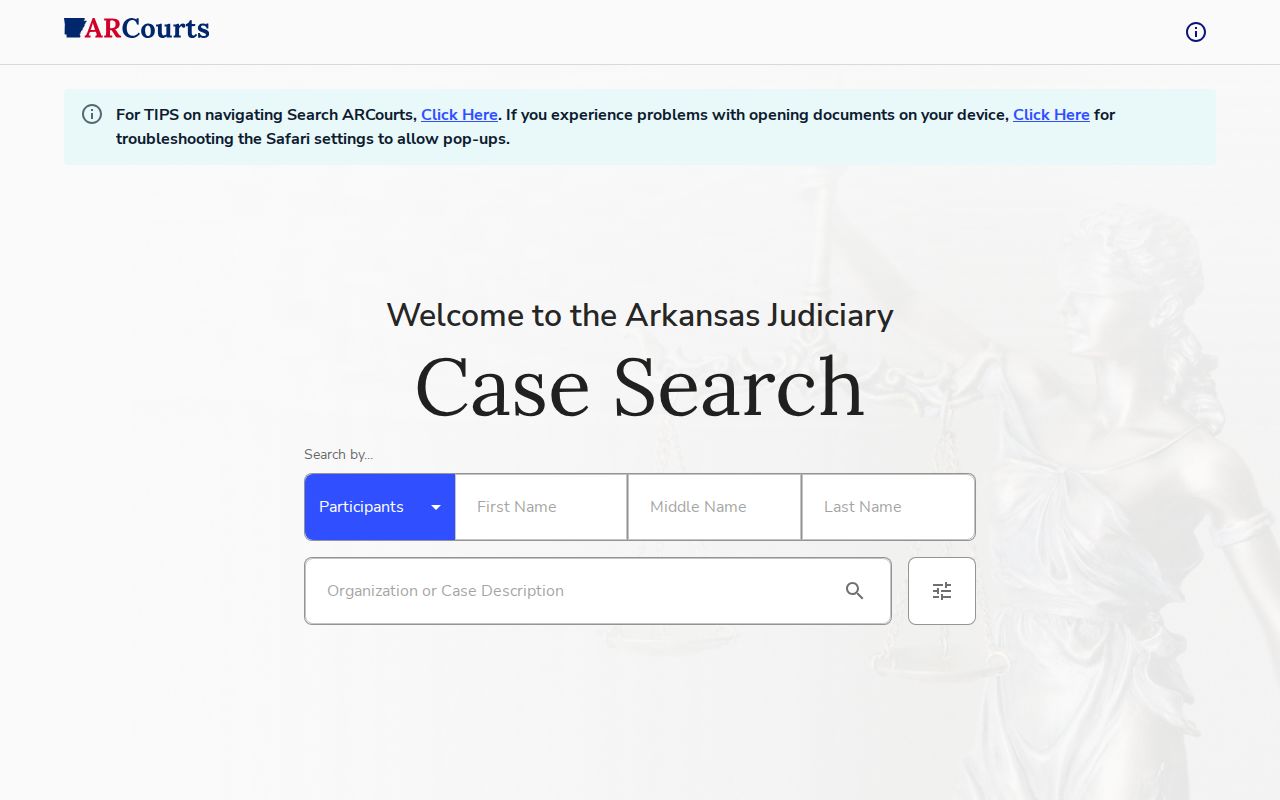
A case role and date should corroborate identity, never substitute for it.
Hot Springs Voter Confirmation
Arkansas VoterView works one name at a time. It is a confirmation tool, not a browsable Hot Springs residents directory or street directory. The form requests a first name, last name, date of birth, and county. Only then will it return anything. A match confirms registration status. It can also display the polling place, district or precinct, and election details. How a person voted stays private. A nonmatch is not proof of anything. A spelling slip, a recent move, an inactive status, or a missing registration can all produce one.
The statewide data route looks different. Arkansas Constitution Amendment 51 governs the centralized voter list. It also shields certain fields, including anything tied to the Address Confidentiality Program. A written request to the Secretary of State can ask for registration files, vote-history files, or both together. Vote history records participation only, never a ballot choice. Protected details must remain shielded under any release. Use the Arkansas VoterView form only when the required identity facts are lawfully known.
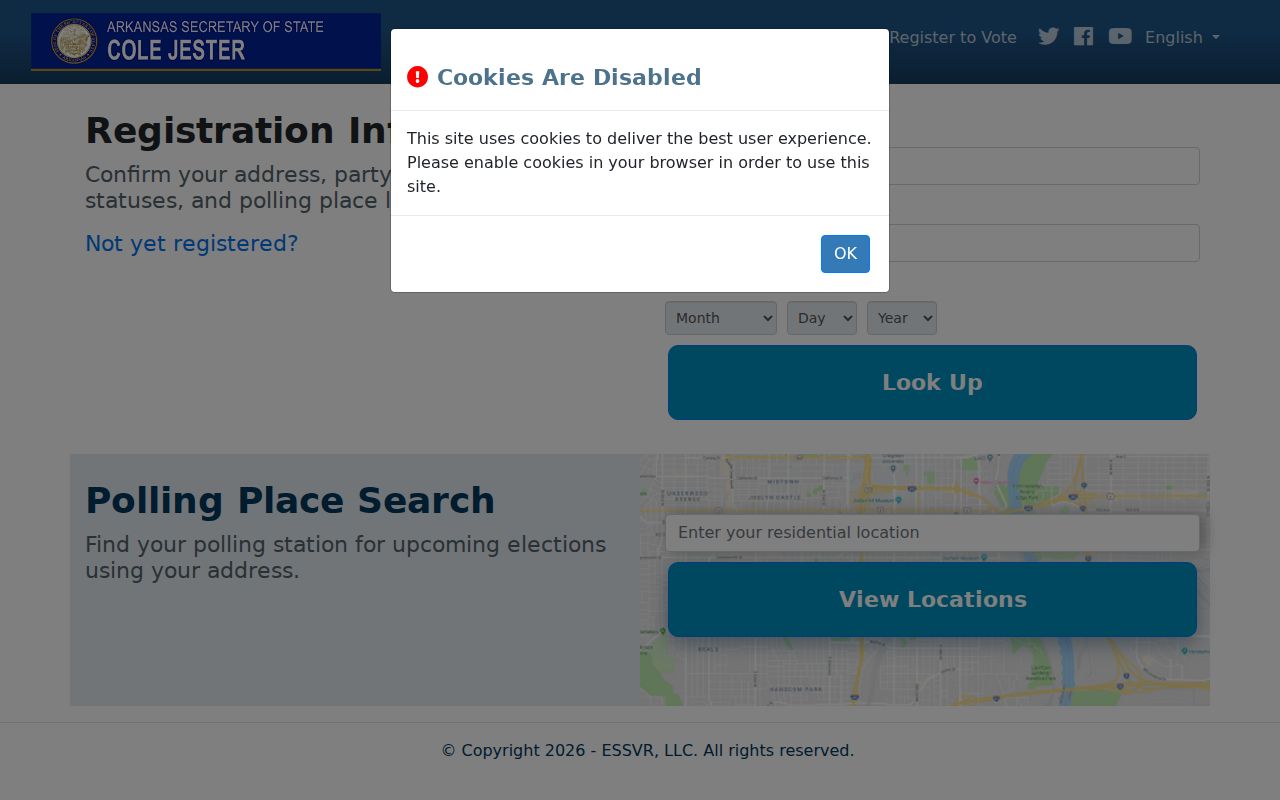
The form's identity gate is a privacy control, not an obstacle to work around.
Current Hot Springs Directory Sources
No single roll lists every Hot Springs household today. Each record captures one role. The assessor names owners and tax-mail recipients. VoterView confirms a registered voter from identifying inputs. The recorder ties people or entities to recorded instruments. City staff pages show public roles and office contacts. State business and license indexes can confirm a professional or business tie, though their service and premises addresses are not automatically homes.
| Resident clue | People or roles shown | Official keeper | Access path |
|---|---|---|---|
| Real-property roll | Owner and mailing recipient | Garland County Assessor | actDataScout or counter |
| Voter confirmation | Matching registered voter | Garland County Clerk and SOS | VoterView or lawful data request |
| Recorded instruments | Grantors, grantees, lien parties | Circuit Clerk as recorder | PublicSearch or courthouse |
| Public case docket | Case parties and roles | Arkansas courts and local clerk | CourtConnect or counter |
| City records | Applicants, owners, public staff | Hot Springs departments | Forms, archive, or FOIA request |
Verifying one person calls for a different approach than surveying a residents directory. Keep identity checks in order. Require agreement between independent records before you trust the match.
Hot Springs Address Evidence
Planning and Neighborhood Services add municipal evidence by address. Hot Springs posts forms covering new addresses, street names, subdivisions, lot splits, historic-district work, zoning, and other development tasks. A single file can name an owner, applicant, local contact, parcel, project site, and date. Those roles matter. A contractor or short-term-rental contact need not live at the premises.
Start from the exact situs address and keep the parcel number beside it. Then request the named file type with a sensible date span. A New Address Request documents an administrative change. A subdivision or lot-line file explains why one older parcel became several current accounts. Historic-district and zoning files may add a project record without naming any occupant. These details reconcile an address trail. But each person must stay in the role printed on the record.
Neighborhood Services also keeps address-based files on vacant structures, lot conditions, notices, and enforcement. Ask by exact property address and date range. Exempt personal detail may be redacted. The current Hot Springs applications and forms hub is the best route to current workflows. For a parcel-by-parcel method, use the Hot Springs street directory.
Hot Springs FOIA Fallback
Arkansas Freedom of Information Act requests fill the gaps. They work when a nonexempt city or county record is not indexed online. Ark. Code Ann. §§25-19-101 through 111 presumes official-function records open unless an exemption applies. Ask for records, not answers. Name the department, record type, person or address, date span, and preferred electronic format. Readily available records should be available promptly. A custodian may set a time within three working days when material sits in active use or storage.
Ordinary copies can be charged at actual reproduction cost plus mailing. Special electronic manipulation may support personnel charges under the statute. The county's online request portal routes county-office requests. The City of Hot Springs runs its own Records Request/FOIA path. The Garland County NextRequest portal shows the county request channel.
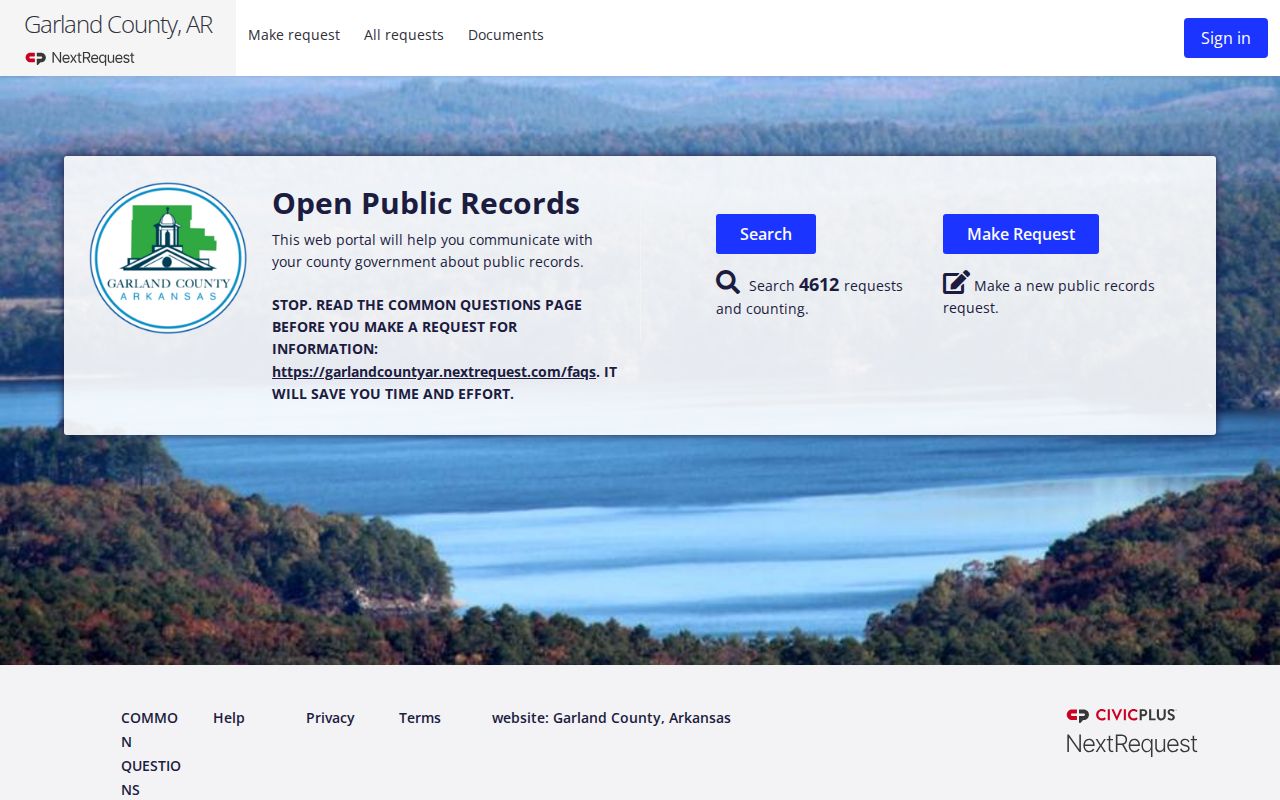
A narrow request is easier to route, search, review, and price than a broad demand for everything about a person.
Note: Vital certificates, adoption and juvenile matters, protected voter data, sealed cases, and specified personal identifiers remain outside ordinary open-record access.
Historic Hot Springs Resident Rolls
The Garland County Historical Society is the deep shelf for past residents of Hot Springs. Its research library holds city directories from 1887 forward. Telephone directories run from 1903 forward. Death books cover 1898 through 1923. The library also keeps newspapers, maps, an 1890s jail register, early police dockets, and vertical files on people, firms, groups, and places. Named early directories from 1876 to 1877 and 1883 to 1884 also survive. They appear in larger genealogy collections.
A directory entry can record a name, trade, and business site. It may list a home or boarding place, and later a spouse or widow notation. The printed abbreviation key controls meaning. A dated directory supports occupancy for its canvass period. But a disappearance can mean a move, death, omission, or spelling change. The full shelf and household method belong in the Hot Springs city directory collections.
The historical society holdings guide describes its local maps, photos, vertical files, and research resources.

The society reports more than 40,000 photos and items. That depth makes it a strong local supplement when a formal resident lookup runs dry.
Hot Springs Historical Gaps
Garland County formed in 1873 from parts of Hot Spring, Montgomery, and Saline counties. Land, court, probate, and marriage work from before that date may sit under a predecessor county. It could also sit in a state or federal archive, or in Hot Springs Reservation records. The city name creates another trap. Hot Spring County is a separate county. Catalog searches should test Hot Springs, Hot Springs National Park, and Garland. That is safer than routing the work to the wrong jurisdiction.
The destroyed 1890 federal population schedules leave a real gap. Local sources help bridge it. Directories, the 1890s jail register, 1892 voter evidence, deeds, death books, and newspapers can each place a person in time. They carry different contexts and cannot be merged as if they were one census. No official Garland source documents a courthouse fire that erased a defined series. So that story should not be used.
Hot Springs Record Roles
Official sources beat commercial compilations for the facts they were created to record. A custodian index carries a date, role, and correction route. A commercial people-finder category may merge names, lag moves, or revive obsolete relatives. Treat it as a clue. It never outranks a deed, parcel card, docket, or dated directory entry.
| Source type | Main strength | Main limit |
|---|---|---|
| Official custodian record | Defined purpose, date, and keeper | May omit people outside its role |
| Archived directory or paper | Period address and local context | Can contain omissions or print errors |
| Commercial compilation | Broad lead gathering | Stale and merged data require verification |
Lawful use. Hot Springs public records support family history, estate work, civic review, and personal research. Never use an address trail to stalk, harass, or harm anyone.
Hot Springs Cemetery Clues
Hot Springs City Cemetery holds an unusual resident trail. It began as a pest house during the 1895 smallpox epidemic. In November 1896 a public cemetery was added for residents without means. It also served visitors who died while seeking care. Burials continued into the mid-1980s, and many graves are unmarked. The city directs name research to a memorial index. The cemetery entered the National Register in 2021.
The word "Visitors" carries real weight in a resort city. A burial, bathhouse record, hotel listing, or medical notice can mark a temporary stay. Such a record may not point to a settled home. Weigh any cemetery lead against the historical society's original death books, an obituary, city directory entries, and state certificate rules. Only then draw a household conclusion. The Hot Springs residents directory helps here too. It links cemetery clues to other resident records.