
Hot Springs Previous Resident Sources
The strongest trail for previous residents begins with the present parcel and moves backward. Sources overlap unevenly. Deeds identify parties to land transfers, while directories and census schedules can identify address users. Maps prove that a structure or number existed in a given era. Death, newspaper, and probate material can explain where a named person went after the address trail ends.
| House-history source | Local span | Where consulted | What it can establish |
|---|---|---|---|
| Recorder online index | First online year not published | Garland PublicSearch | Indexed parties, instrument date, and legal clues |
| Recorder books | Garland County from 1873 | Circuit Clerk, archives, predecessor jurisdictions | Older links in the chain of title |
| City directories | Early examples in 1876–77; strong local run from 1887 | Garland County Historical Society and cataloged collections | Named occupants, address, and role at survey time |
| Telephone directories | 1903 forward stated locally | Historical society; Library of Congress scans for 1934–55 | Subscriber and address clues |
| Federal census | 1880–1950 named schedules, except destroyed 1890 population schedules | NARA and genealogy databases | Household members, relationships, and address context |
| Sanborn maps | Seven documented years from 1890 through 1945 | GCHS, Library of Congress, and NPS references | Footprint, use, materials, and historic numbering |
| Death books | 1898–1923 | Garland County Historical Society | A possible endpoint for a past occupant |
| City files | Exact digital start not published | Planning and Development or city FOIA request | Applicant, work, inspection, and address chronology |
Begin with the newest deed for ownership. Begin with a directory nearest the target year for address use. For a pre-1873 land question, expect predecessor-county, federal reservation, or state and federal archive material rather than a simple Garland County series.
Reverse the Garland Deed Chain
Previous residents and prior owners are not the same group. The Garland assessor record starts the ownership trail by giving the current parcel ID, owner spelling, situs address, legal description, and transfer reference. The legal description is more durable than a street number and should be copied exactly.
- Find the current acquisition deed. Match the grantee and land description to the parcel card, then record execution and recording dates.
- Read the grantor, the person or entity transferring an interest. Search that grantor as a grantee in an earlier time period.
- Confirm the same lot, block, subdivision, or metes-and-bounds description in the earlier instrument. Do not rely on names alone.
- Repeat the seller-to-earlier-buyer switch. Use mortgages and releases only to bracket dates because they do not by themselves convey title.
- When the web index stops, give the Circuit Clerk the book, page, instrument, and land clues and ask for counter books or microfilm.
- Grantor and grantee
- The grantor transfers an interest; the grantee receives it.
- Chain of title
- The linked sequence of recorded transfers affecting the same land.
- Legal description
- The lot, block, subdivision, or surveyed description that identifies land even if its street address changes.
- Criss-cross directory
- A volume or section arranged by address, allowing a place-to-person search.
If the assessor transfer history and recorder index seem to conflict, preserve both readings. A deed may cover several parcels, indexing can lag, and a tax card may display a trustee or taxpayer differently. The recorded instrument controls the legal transfer question, while the assessor can explain its update timing.
Hot Springs Recorder Search Tactics
The Garland Official Record Search provides quick and advanced routes for recorder material. It offers a department selector, a search term, recorded-date controls, preset date spans, and index-only or full-text OCR scope. Search each buyer and seller in both roles. Then inspect the image before treating a hit as part of the address chain.
OCR phrase search is the useful insider option. It may find a subdivision, hotel, or street phrase that was not placed in a structured index field. OCR errors are common in old type, so a missed phrase does not close the search. Grantor and grantee indexing remains the base method. The landing page did not publish a first online year or image fee. Call the Circuit Clerk at 501-622-3630 for older material and current copy terms.
The Garland County Circuit Clerk page identifies the office that serves as court clerk and ex-officio recorder.
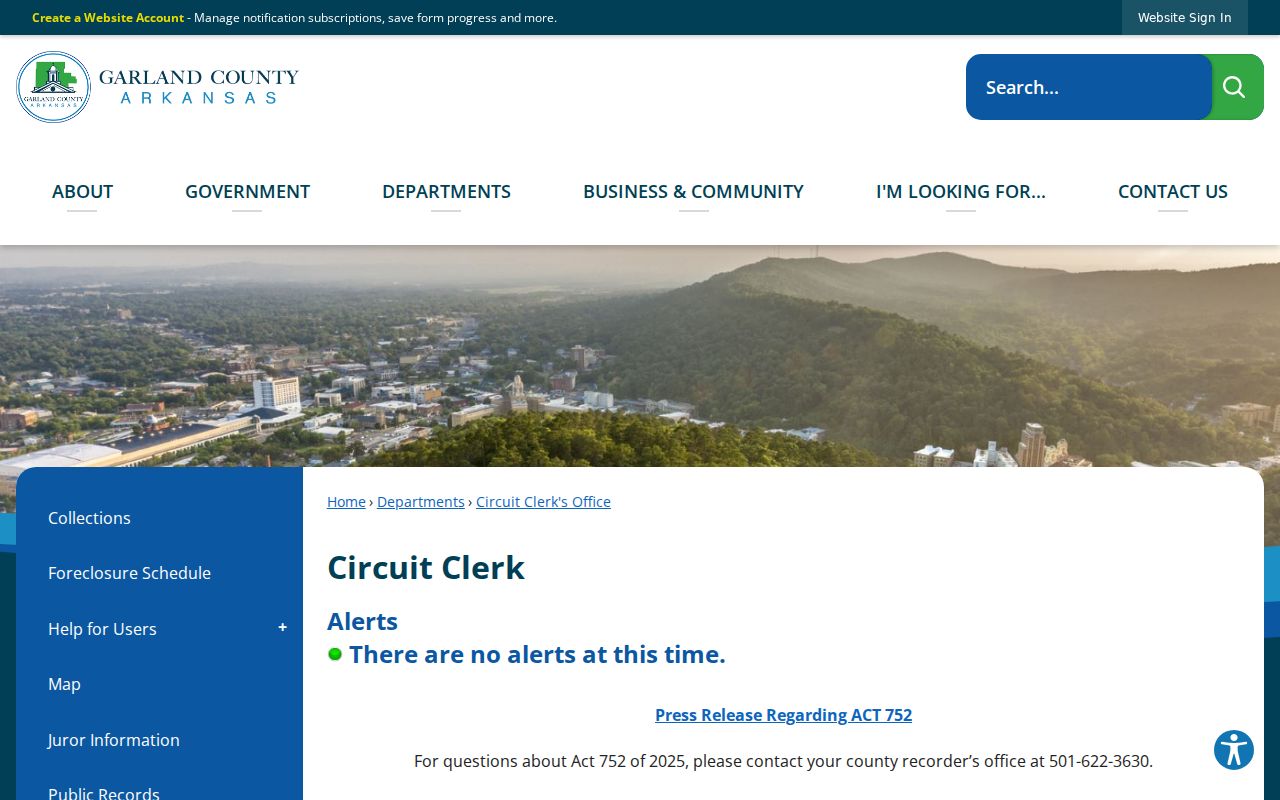
The office source is the fallback when a past-resident deed clue falls outside the online index or needs a certified copy.
Note: The recorder index certification date shows how current the landing page is, not how far back the searchable records begin.
Track Hot Springs Past Residents
Once the ownership chain is stable, add the address users. The Garland County Historical Society holdings report city directories from 1887 forward and telephone directories from 1903 forward. Early named volumes also exist for 1876–77 and 1883–84. A directory entry can distinguish residence, boarding place, and business location, so copy the abbreviation key before interpreting it.
Pair the nearest directory with a named census schedule. The latest public federal population census is 1950 under the 72-year access rule. A concise process is: address and directory year, then census household, then adjacent directory years, followed by obituary or probate evidence if the person disappears. Disappearance may mean a move, death, spelling change, or simple omission.
The detailed shelves and publishers are covered on the Hot Springs city directories page. For previous residents, the task is not to describe the whole collection. It is to use each dated entry as one layer in a single-address chronology.
Map Hot Springs Past Residents
Hot Springs Sanborn fire-insurance maps survive for at least 1890, 1896, 1901, 1908, 1915, 1925, and 1945. The Library of Congress Sanborn collection is one digitized access point. These maps can show the building footprint, material, use, number, and additions. They do not name an occupant. Pair a mapped building with the directory entry and recorded land description before calling it the same property.
Street-number continuity is a known trap. The research did not find an official source setting one comprehensive citywide renumbering year, so an unsourced date should not be repeated. Create a crosswalk with the printed address, directory year, nearest crossing, Sanborn sheet, parcel or legal description, and modern candidate. Compare neighboring structures and subdivision plats. This is far safer than matching the digits alone.
Central Hot Springs has the strongest overlap among early directories and Sanborn coverage. Outlying growth can require later plats and municipal annexation evidence. Postal wording such as “Hot Springs National Park” should be retained exactly while land jurisdiction is checked separately.
Bridge Hot Springs Resident Gaps
The destroyed 1890 federal population schedules create a major gap for previous residents. Hot Springs has unusually strong substitutes. The historical society holds an 1890s jail register, early police dockets, original death books from 1898 through 1923, newspapers, maps, and the directory run. Voter evidence from 1892 and deeds can add more dated links.
These sources must keep their original meaning. A jail register documents custody, not a settled address. A police docket records a proceeding. A newspaper notice may name an heir or land description without showing who used the premises. The value comes from agreement across independent sources, not from turning one unusual appearance into a claim of residence.
Garland County was formed on April 5, 1873, from parts of Hot Spring, Montgomery, and Saline counties. Earlier land, court, marriage, or probate research can therefore cross county lines or involve federal Hot Springs Reservation records. Also distinguish Garland County from Hot Spring County, a separate place that often causes catalog errors.
Hot Springs Pleasant Street Residents
A 2024 Hot Springs resurvey of the Pleasant Street Historic District offers a current local model for linking a place to past residents. The work pairs parcel IDs, known owners, directory spans, and census years. No one source carries the whole conclusion. Parcel identity anchors the building, while directory and census evidence supply dated personal context.
That method scales to one house. Keep a source line for each fact: custodian or volume, search terms, date consulted, page or image number, and the role assigned to each name. A permit applicant, deed party, voter, subscriber, and obituary subject can all appear beside one address for different reasons.
House-history rule. Treat an owner, mailing recipient, and occupant as separate roles until dated records clearly connect them.
Close Hot Springs Resident Trails
Probate, obituaries, cemetery material, and court indexes can explain the end of an address trail. The Garland County Clerk maintains probate filings, while public case information may appear through Arkansas CourtConnect. Newspapers held on GCHS microfilm for 1909–1949 can contain obituaries, estate notices, election lists, and address-linked advertisements. Original death books may offer another lead, but an official certificate follows Arkansas vital-record access rules.
Federal litigation is a separate layer. PACER is the federal case locator and document system, relevant only when the person or land trail reaches a federal filing.
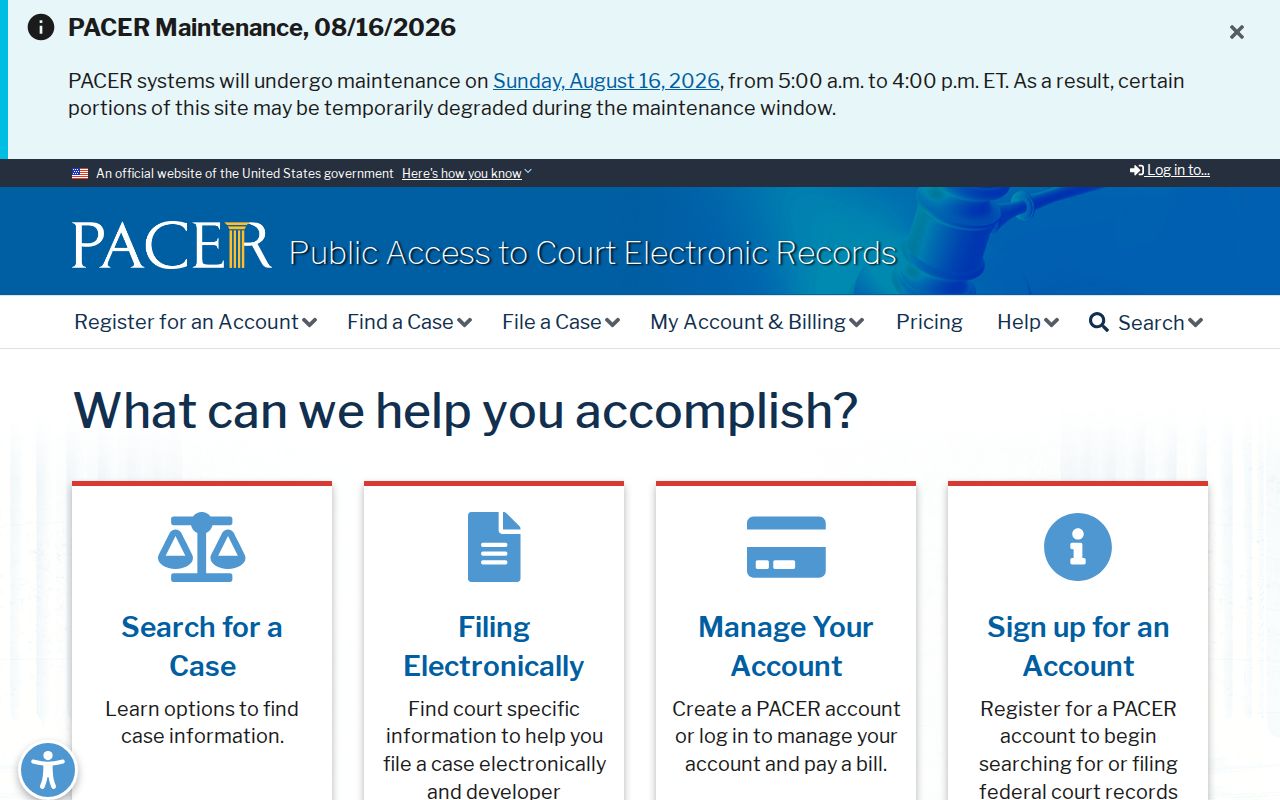
The federal portal does not replace Garland County deeds, local probate, or directory evidence. It is an endpoint check for a trail that specifically points to federal court.
Finish by rating the evidence. A matched deed and legal description strongly establish an owner at a transfer date. A census or clearly read directory can support address use. An obituary may connect kin and dates. A search result with the same name but no matching age, role, land, or date stays unresolved.
Lawful use. Research previous residents for family history, heir questions, and the story of a place. Never use living-person clues to stalk, harass, threaten, or defeat a protected address.