
Finding Hot Springs Residents
A useful Hot Springs residents directory search starts with the fact already known. A street address points first to the Garland County assessor. A full name may fit the assessor, CourtConnect, the recorder, or a state license board. An old address belongs in dated city directories, census schedules, maps, and deed books. These are not interchangeable lists. The property roll names taxpayers and owners, while VoterView confirms one registration only when the searcher already has the required identifying details.
Build a trail, not a guess. Keep the date and role attached to every result. A deed party, permit applicant, registered agent, tax-mail recipient, and directory occupant can all be different people at the same Hot Springs address. Two independent records with matching identity and geography are far stronger than one name hit.
- Search the Garland County property roll by owner or situs address, then save the parcel number and legal description.
- Use VoterView only with lawfully known identifying inputs to confirm a registration, precinct, and polling place.
- Check Garland Official Record Search for deeds, mortgages, liens, and other indexed instruments tied to the name or parcel.
- Use CourtConnect for a matching public case and record the court, party role, case number, and filing date.
- For older residents, move to dated directories, census schedules, newspapers, death books, and maps at local or state archives.
Hot Springs Directory Custodians
Garland County divides resident evidence among offices. The Circuit Clerk also serves as ex-officio recorder, so the courthouse holds both public court files and recorded property instruments. The Assessor connects an owner name to parcel, situs, mailing address, values, and legal description. The County Clerk maintains elections and the voter roster and also handles probate-related duties. Records that are not already online may be requested from the office that created them, not from a general directory vendor.
Garland Circuit Clerk
501 Ouachita Avenue, Room 207
Hot Springs, AR 71901
501-622-3630
Garland County Assessor
200 Woodbine
Hot Springs, AR 71901
501-622-3730
The City of Hot Springs portal leads to municipal departments, forms, and request routes.
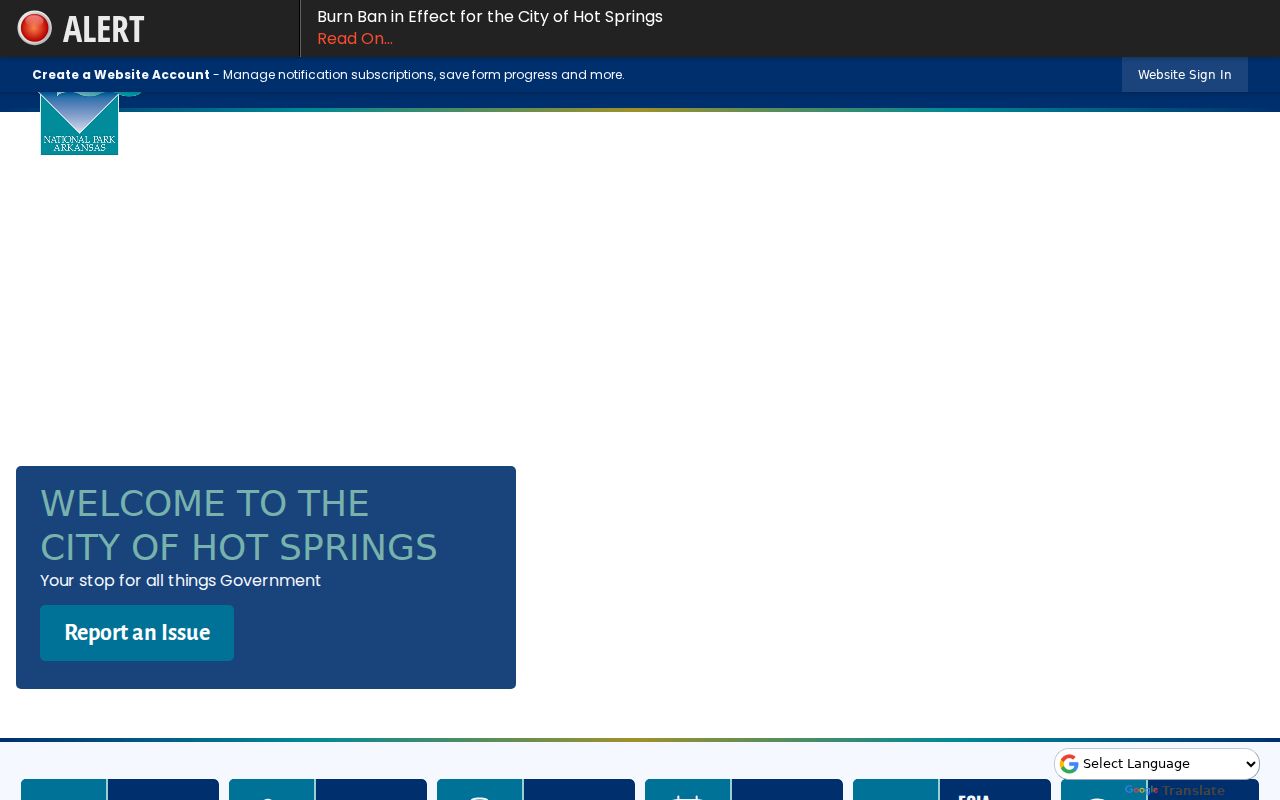
City records add permit, code, board, and archive context when county rolls do not answer the question.
Hot Springs Property Roll
The assessor is the best first stop when a Hot Springs search begins with a street or owner. Its actDataScout record can show the parcel ID, owner spelling, owner mailing address, situs address, legal description, land and improvement values, property class, acreage, transfer references, and building details when populated. Situs means the parcel's physical address. Mailing address means the destination for tax notices. A match between them can support owner occupancy, but it is not proof.
| Search control | Input | Best use | Search note |
|---|---|---|---|
| Search mode | Owner, parcel, or address | Choose the known fact | One mode at a time |
| Owner | Surname or organization | Name-led lookup | Try spelling variants |
| Parcel number | County identifier | Exact parcel retrieval | Keep the original format |
| Address | House number and street | Place-led lookup | Relax suffix if no hit |
| Map | Zoom, pan, parcel click | Adjoining land | Lines are not a survey |
The Garland real-property search shows the current hosted interface.
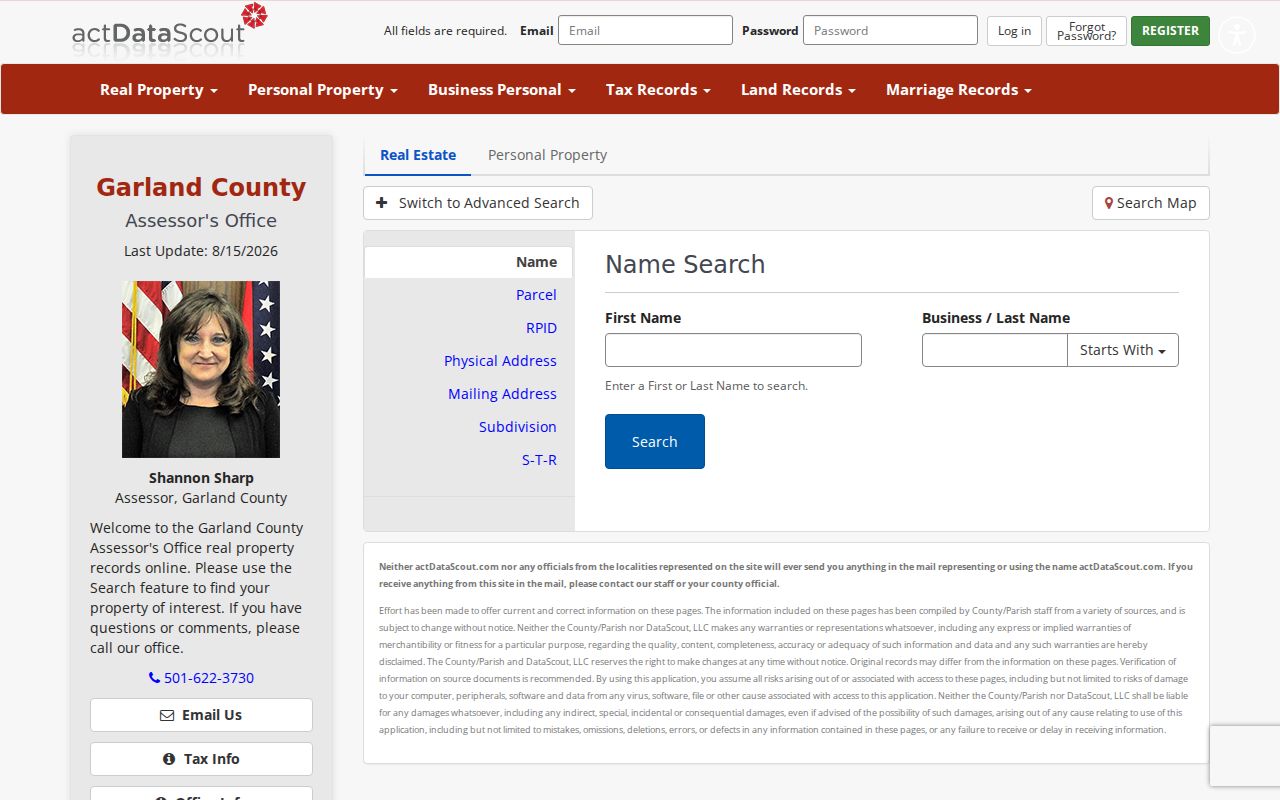
The parcel number found here becomes the stable link to deeds, plats, taxes, and city property files.
Occupancy check. A tax mailing address or exemption is evidence about an owner, not a complete list of people who live at the Hot Springs parcel.
Hot Springs Deed Index
Garland Official Record Search tracks deeds, mortgages, liens, and related recorded instruments. The landing page offered Real Property as the department, a search term, recorded-date range, quick date buttons, and a choice between indexed fields and indexed fields plus full-text OCR when researched. OCR means machine-read text from document images. It helps locate a street, hotel, or subdivision that structured indexing missed, yet old type and scans can create errors.
Use current owner and seller names in both grantor and grantee roles. Then inspect document type, recorded date, instrument or book and page reference, and the legal-description text. A mortgage does not transfer title. A release does not identify a new owner. The deed image and its legal description must match the parcel before a name becomes part of the property chain.
The Garland Official Record Search provides the live recorder index.
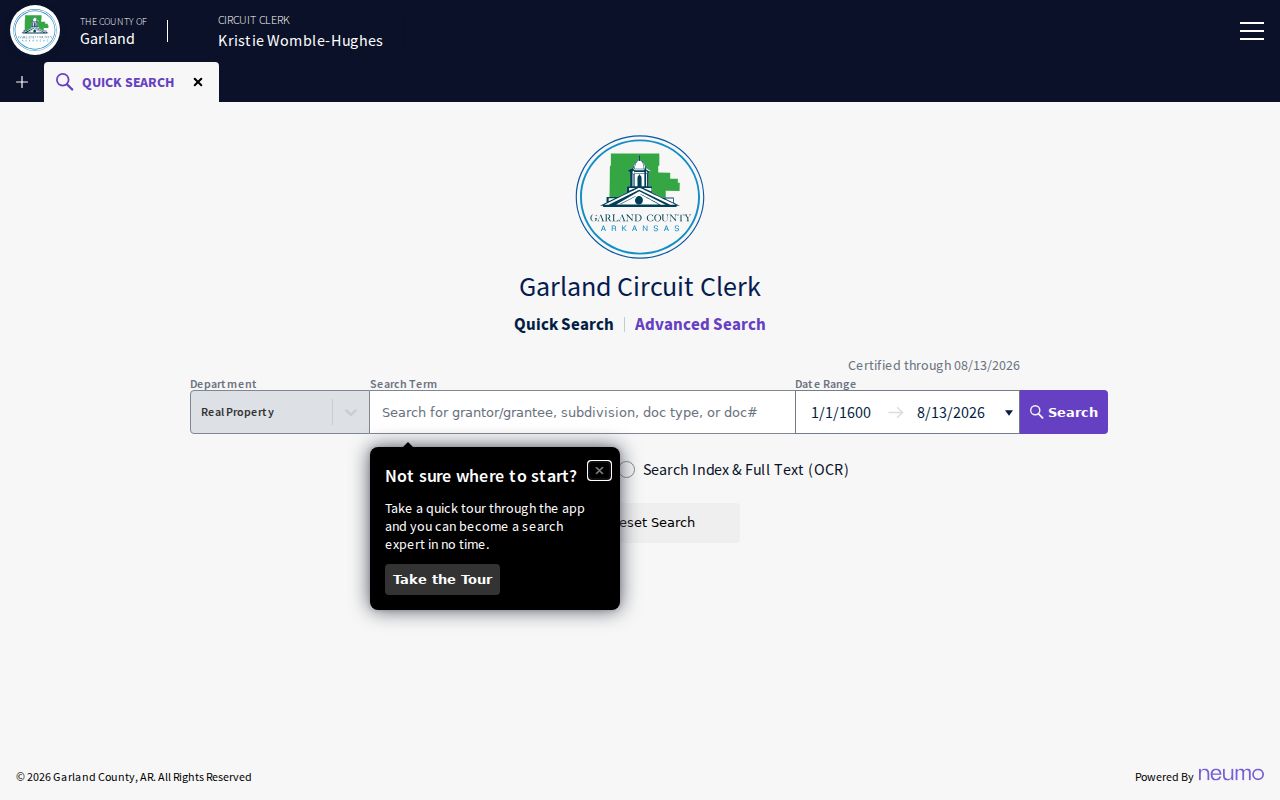
This search is distinct from CourtConnect, which indexes court cases rather than recorded land instruments.
- Parcel
- A county tax and mapping unit with its own identifier.
- Index
- A finding aid that points to a record; it is not always the record image.
- Grantor and grantee
- The indexed parties conveying and receiving an interest in a deed.
- Criss-cross directory
- A historical directory arranged by street or telephone rather than surname.
Hot Springs Court Names
CourtConnect covers public case information for Garland County Circuit Court and District Court. Search by person or business name, case number, or case information where the interface permits. Add Garland County and a case type or date range to reduce same-name matches. A result may include the case number, court, filing date, status, parties and their roles, attorneys, docket events, hearing dates, and disposition text. Linked documents are not guaranteed.
Juvenile, adoption, sealed, expunged, and otherwise protected matters may be absent or limited. A missing search hit proves little. For a document or certified copy, note the case number and contact the Circuit Clerk. Federal cases belong in PACER for the U.S. District Court for the Western District of Arkansas.
The Arkansas CourtConnect search is the official statewide docket route.
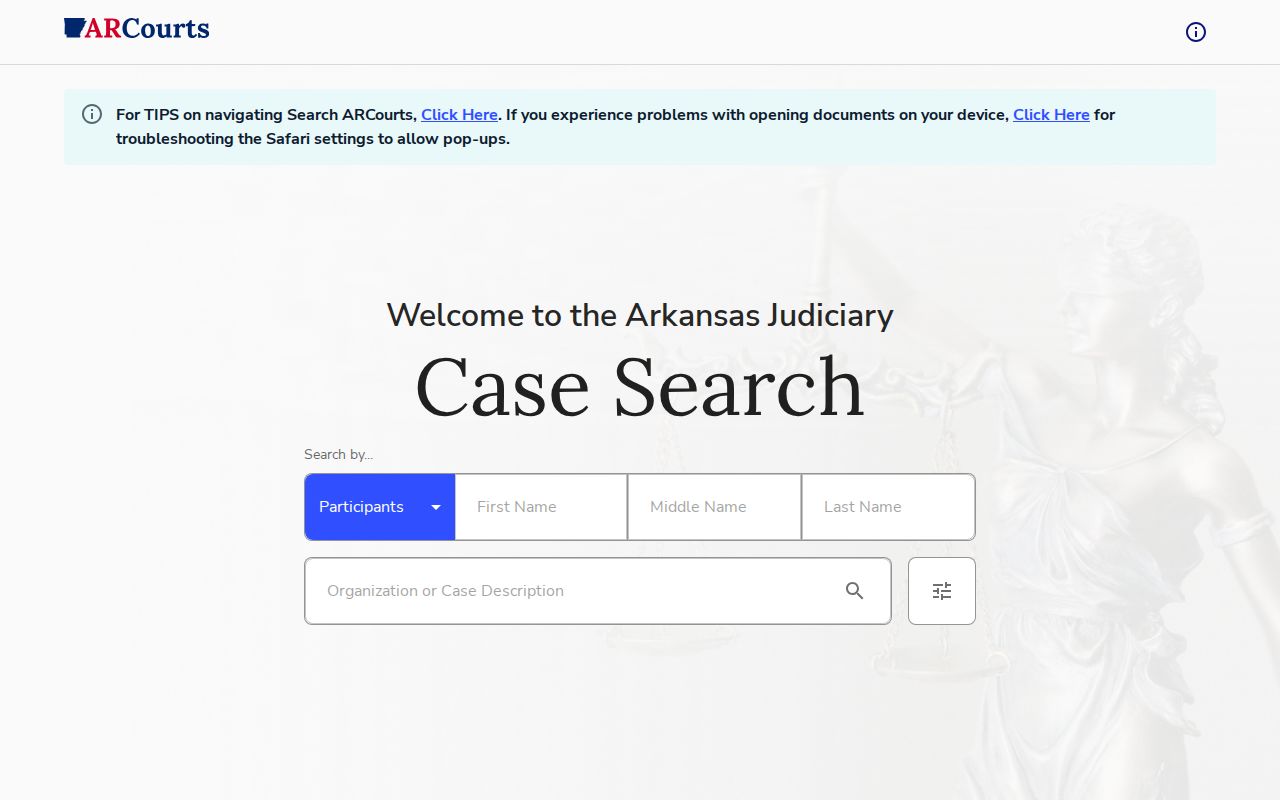
A case role and date should corroborate identity, never substitute for it.
Hot Springs Voter Confirmation
Arkansas VoterView is an individual confirmation tool, not a browsable Hot Springs residents directory. Its form asks for first name, last name, date of birth, and county. A match can confirm registration status and show polling place, district or precinct, and election information. It never shows how a person voted. A nonmatch may come from spelling, a recent move, inactive status, or a missing registration.
The statewide voter-data route is different. Arkansas Constitution Amendment 51 governs the centralized list and protects specified fields, including information tied to the Address Confidentiality Program. A written SOS request can specify registration, vote-history, or combined files. Vote history means participation, not a ballot choice. Protected data must stay shielded.
Use the Arkansas VoterView form only when the required identity facts are lawfully known.
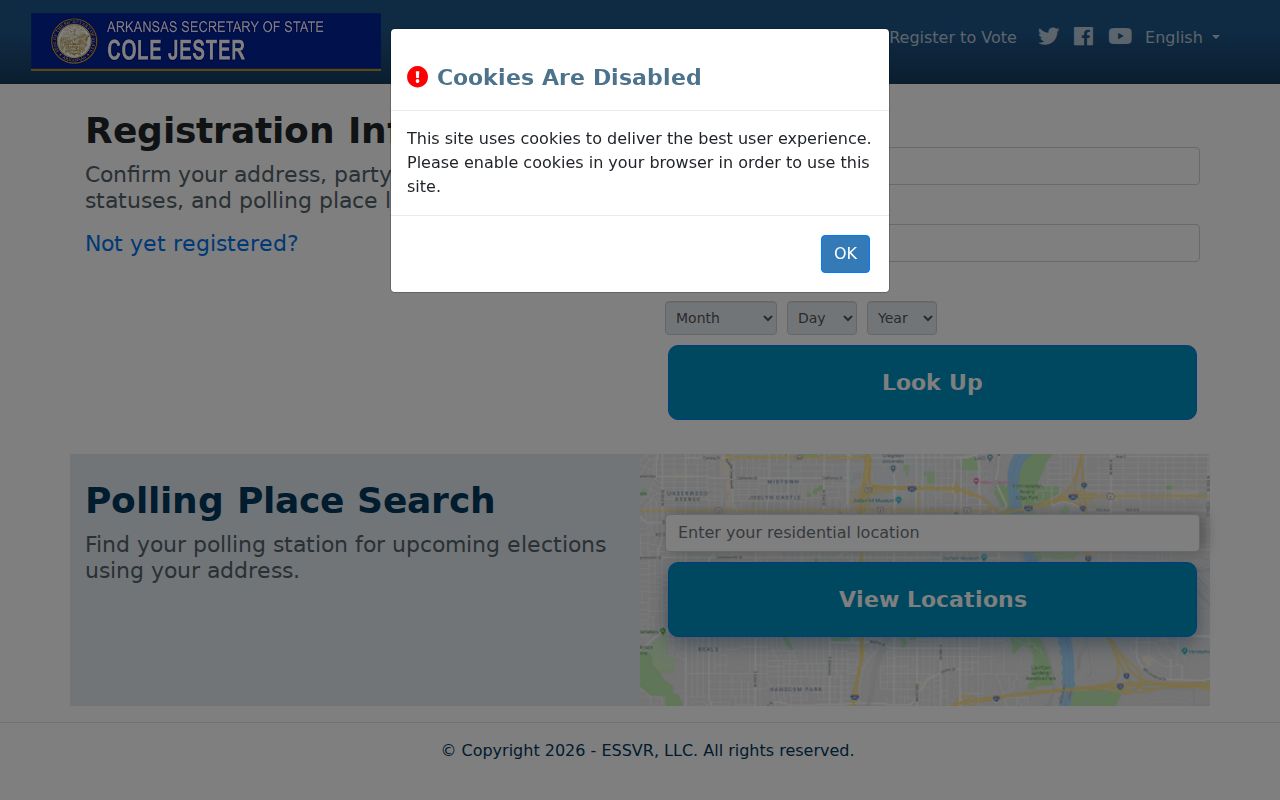
The form's identity gate is a privacy control, not an obstacle to work around.
Current Hot Springs Directory Sources
No current record set lists every Hot Springs household. Each roll captures a defined role. The assessor identifies owners and tax-mail recipients. VoterView confirms one registered voter with identifying inputs. The recorder lists people or entities tied to instruments. City staff pages identify public roles and office contacts. State business and license indexes can confirm a professional or business connection, but their service and premises addresses are not automatically homes.
| Resident clue | People or roles shown | Official keeper | Access path |
|---|---|---|---|
| Real-property roll | Owner and mailing recipient | Garland County Assessor | actDataScout or counter |
| Voter confirmation | Matching registered voter | Garland County Clerk and SOS | VoterView or lawful data request |
| Recorded instruments | Grantors, grantees, lien parties | Circuit Clerk as recorder | PublicSearch or courthouse |
| Public case docket | Case parties and roles | Arkansas courts and local clerk | CourtConnect or counter |
| City records | Applicants, owners, public staff | Hot Springs departments | Forms, archive, or FOIA request |
When the goal is to verify one person rather than survey sources, keep the identity checks in order and require agreement between independent records.
Hot Springs Address Evidence
Planning and Neighborhood Services add municipal evidence by address. Hot Springs posts forms for new addresses, new street names, subdivisions, lot splits, historic-district work, zoning, and other development tasks. A file can name an owner, applicant, local contact, parcel, project site, and date. Those roles matter. A contractor or short-term-rental local contact need not live at the premises.
Begin with the exact situs address and keep the parcel number beside it. Then ask for the named file type and a sensible date span. A New Address Request can document an administrative change, while a subdivision or lot-line file can explain why one older parcel became several current accounts. Historic-district and zoning files may add a project record without identifying an occupant. These details help reconcile the address trail, but each person must remain in the role printed on the record.
Neighborhood Services keeps address-based files on vacant structures, lot conditions, notices, and enforcement. Ask by exact property address and date range. Exempt personal detail may be redacted. The current Hot Springs applications and forms hub is the best route to current workflows. For a full parcel-by-parcel method, use the Hot Springs street directory.
Hot Springs FOIA Fallback
Arkansas Freedom of Information Act requests fill gaps when a nonexempt city or county record is not indexed online. Ark. Code Ann. §§25-19-101 through 111 presumes official-function records open unless an exemption applies. Ask for records, not answers. Name the department, record type, person or address, date span, and preferred electronic format. Readily available records should be available promptly; a custodian may set a time within three working days when material is in active use or storage.
Ordinary copies can be charged at actual reproduction cost plus mailing. Special electronic manipulation may support personnel charges under the statute. The county's online request portal routes county-office requests, while the City of Hot Springs provides its own Records Request/FOIA path.
The Garland County NextRequest portal shows the county request channel.
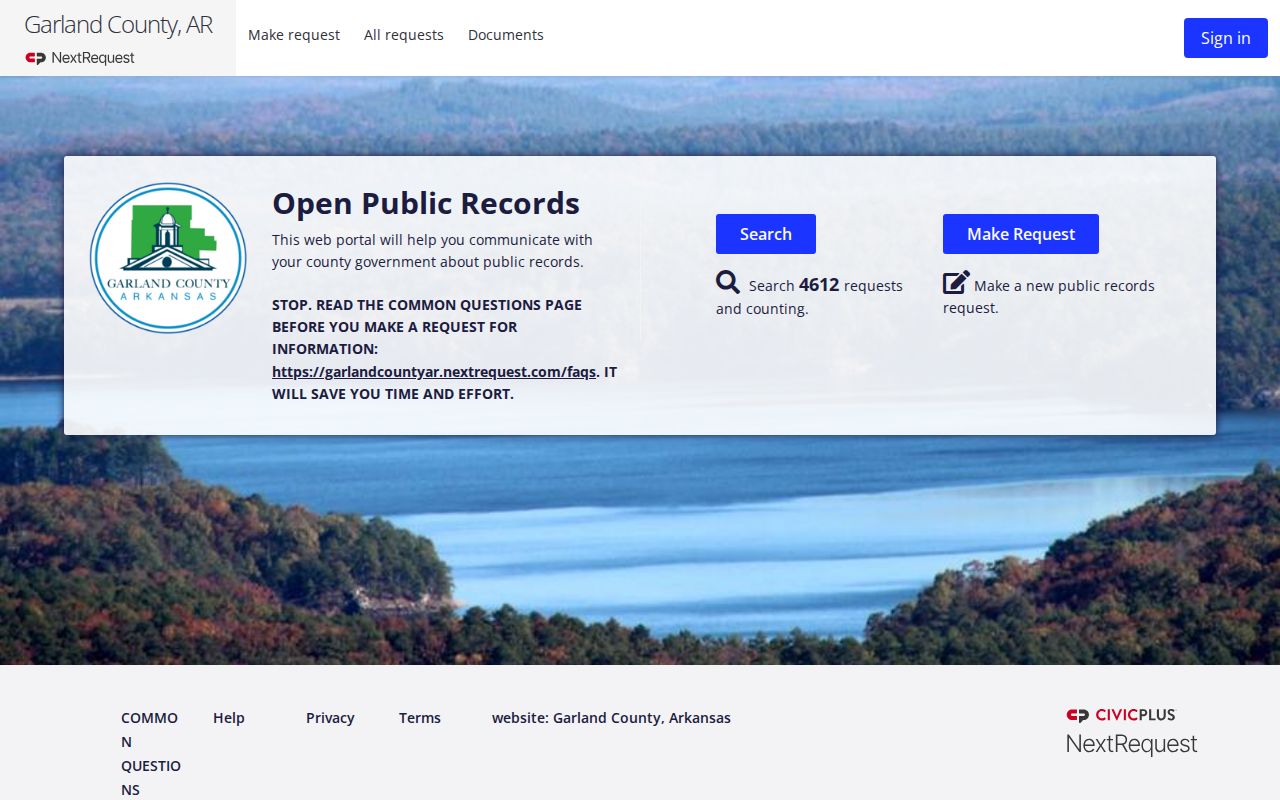
A narrow request is easier to route, search, review, and price than a broad demand for all records about a person.
Note: Vital certificates, adoption and juvenile matters, protected voter data, sealed cases, and specified personal identifiers remain outside ordinary open-record access.
Historic Hot Springs Resident Rolls
The Garland County Historical Society is the deep shelf for older Hot Springs residents. Its research library holds city directories from 1887 forward, telephone directories from 1903 forward, death books from 1898 through 1923, newspapers, maps, an 1890s jail register, early police dockets, and vertical files on people, firms, groups, and places. Named early directories also survive for 1876 to 1877 and 1883 to 1884 in larger genealogy collections.
Directory entries can record a name, trade, business site, home or boarding place, and later a spouse or widow notation. Their printed abbreviation key controls meaning. A dated directory can support occupancy for its canvass period, but disappearance can mean a move, death, omission, or spelling change. The full shelf and household method belong in the Hot Springs city directory collections.
The historical society holdings guide describes its local maps, photos, vertical files, and research resources.

The society reports more than 40,000 photos and items, making it a strong local supplement when a formal roll runs dry.
Hot Springs Historical Gaps
Garland County formed in 1873 from parts of Hot Spring, Montgomery, and Saline counties. Land, court, probate, and marriage work from before that date may sit under a predecessor county, a state or federal archive, or Hot Springs Reservation records. The city name creates another trap: Hot Spring County is a separate county. Catalog searches should test Hot Springs, Hot Springs National Park, and Garland rather than routing the work to the wrong jurisdiction.
The destroyed 1890 federal population schedules leave a real gap. Local sources help bridge it. Directories, the 1890s jail register, 1892 voter evidence, deeds, death books, and newspapers can place a person in time. They have different contexts and cannot be merged as if they were one census. No inspected official source documented a Garland courthouse fire that erased a defined series, so that story should not be used.
Hot Springs Record Roles
Official sources beat commercial compilations for the facts they were created to record. A custodian index has a date, role, and correction route. A commercial people-finder category may merge names, lag moves, or revive obsolete relatives. It can be a clue but should never outrank a deed, parcel card, docket, or dated directory entry.
| Source type | Main strength | Main limit |
|---|---|---|
| Official custodian record | Defined purpose, date, and keeper | May omit people outside its role |
| Archived directory or paper | Period address and local context | Can contain omissions or print errors |
| Commercial compilation | Broad lead gathering | Stale and merged data require verification |
Lawful use. Hot Springs public records support family history, estate work, civic review, and personal research. Never use an address trail to stalk, harass, or harm anyone.
Hot Springs Cemetery Clues
Hot Springs City Cemetery carries an unusual resident trail. The site began as a pest house during the 1895 smallpox epidemic. A public cemetery was added in November 1896 for residents without means and for visitors who died while seeking care. Burials continued into the mid-1980s, many graves are unmarked, and the city directs name research to a memorial index. The cemetery entered the National Register in 2021.
Its word “Visitors” matters in a resort city. A burial, bathhouse record, hotel listing, or medical notice can mark a temporary stay rather than settled residence. Compare the cemetery lead with the historical society's original death books, an obituary, directory entries, and state certificate rules before drawing a household conclusion.